
YouTube is the #1 most-watched distributor of content on TVs in the United States. As of this moment, there isn’t a challenger capable of threatening that position–but YouTube is still doing everything it can to stay in that spot ahead of Brandcast, its annual presentation to advertisers.
Like it has the past few years, YouTube will hold its 2026 Brandcast during the TV-focused Upfronts (after already presenting during the digital-focused NewFronts). There, it’ll woo marketers who’ve spent decades paying premium prices for TV ads.
And part of that wooing will likely involve the flurry of new TV products it’s announced this week. That flurry was led by Stations, YouTube’s answer to the 24/7 channels that stock FAST platforms like Tubi, Pluto TV, and Roku. YouTube is introducing Stations with its coverage of this year’s Coachella music festival.
Two other new features, though, got a slightly less splashy reveal.
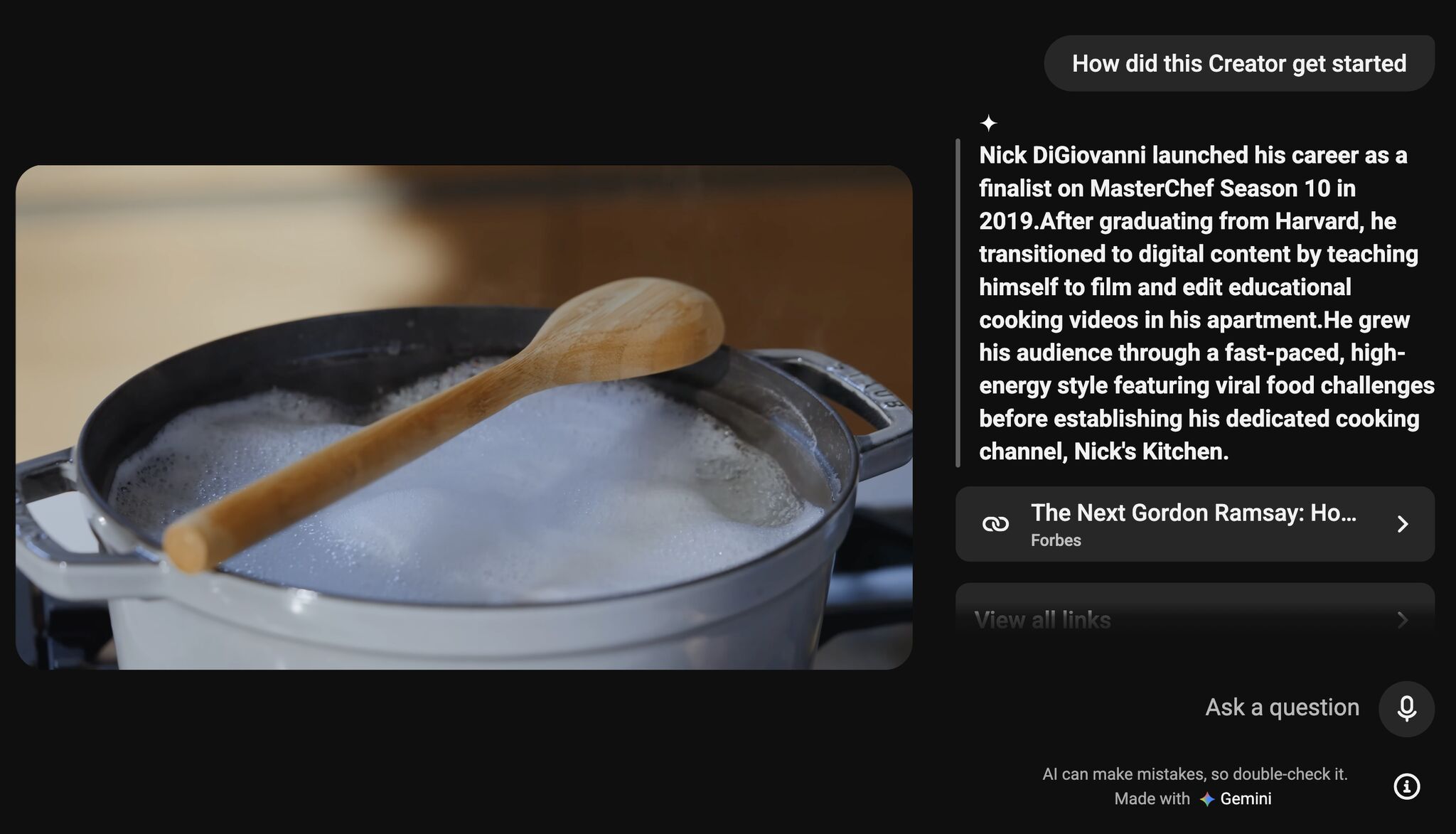
First is “Ask,” YouTube’s video-specific chatbot. It’s already available on YouTube desktop and mobile, but now is coming to TVs with added abilities, like being able to use your TV’s microphone (if it has one) to ask questions.
When Ask launched, YouTube called it a way for viewers to “engage more deeply with the content they were watching.” Example functionalities include “break[ing] down specific moments while watching podcasts, learn[ing] about a city’s landmarks in travel vlogs, and more–all without having to hit pause on their video.”
In an example screenshot posted by Kurt Wilms, YouTube’s Senior Director of Product Management, a viewer asks the chatbot how Nick DiGiovanni got started as a YouTuber. The bot (which runs on Google’s Gemini LLM) responds with facts about DiGiovanni’s background as a MasterChef finalist, and mentions how his first videos were filmed in his apartment.
Obviously this is all information a viewer could find out themself with a search engine, but YouTube’s goal here is to keep people from pausing. More to that point: In his LinkedIn post, Wilms also suggested that viewers should use Ask to find out “What other videos from this creator should I watch?” so YouTube is clearly hoping viewers will let the bot push them to more content.
The other feature is TV Companion, a pairing system where a user’s phone “automatically recognizes what’s playing on your TV, allowing you to interact with comments, control playback, or dive deeper into content without missing a beat,” Wilms said. This system is strung together on YouTube’s end, “no complex pairing or Wi-Fi troubleshooting required,” he promised.
What’s interesting about both the TV Ask feature and TV Companion is that YouTube is going the complete opposite direction of Netflix’s now infamous “second screen” strategy. Netflix is actively dumbing down its productions, assuming viewers will be looking at other content on their phones while ‘watching’ its movies and shows. The results have been…not great.
But YouTube’s features are designed to encourage viewers to stay locked in on content and engage beyond just sitting and staring. It’s aiming to get a viewer’s TV and phone at the same time. It also has enough faith in its audience to think people might have the cognitive capability to ask critical questions while watching videos.
As Wilms put it, “YouTube on the big screen is no longer just a passive experience—it’s an interactive one. Can’t wait for everyone to try these out!”
Visit Tubefilter for more great stories.
Source link